Software Supply Chain Security
Software Supply Chain Security: SBOMs, Signed Builds, and Third-Party Risk
Build confidence in the components, vendors, build systems, and artifacts that reach production.
Modern software relies on third-party packages, CI systems, build services, and vendors. This guide explains how provenance, SBOMs, signed artifacts, and supplier due diligence reduce avoidable supply-chain risk.
Table of Contents
- What software supply-chain security covers
- Trace what you build and run
- Protect the build and release boundary
- Manage third-party and dependency risk
- Risk rating
- Create durable supply-chain governance
What Software Supply-Chain Security Covers
Software supply-chain security covers more than open-source packages. It includes source code, dependencies, build tools, CI/CD services, artifact registries, signing systems, cloud identities, managed providers, and the people and processes that connect them.
The goal is to understand what enters the product, who can change it, how it is built, and how the organization can prove that the artifact deployed to production is the one it intended to release.
Trace What You Build and Run
Maintain an accurate view of applications, components, versions, owners, repositories, build systems, and deployments. A software bill of materials can improve transparency, but it is not a security verdict on its own.
Traceability is valuable during a vulnerability disclosure or supplier incident because it helps teams quickly identify whether a component is present, where it runs, who owns it, and how it can be updated safely.
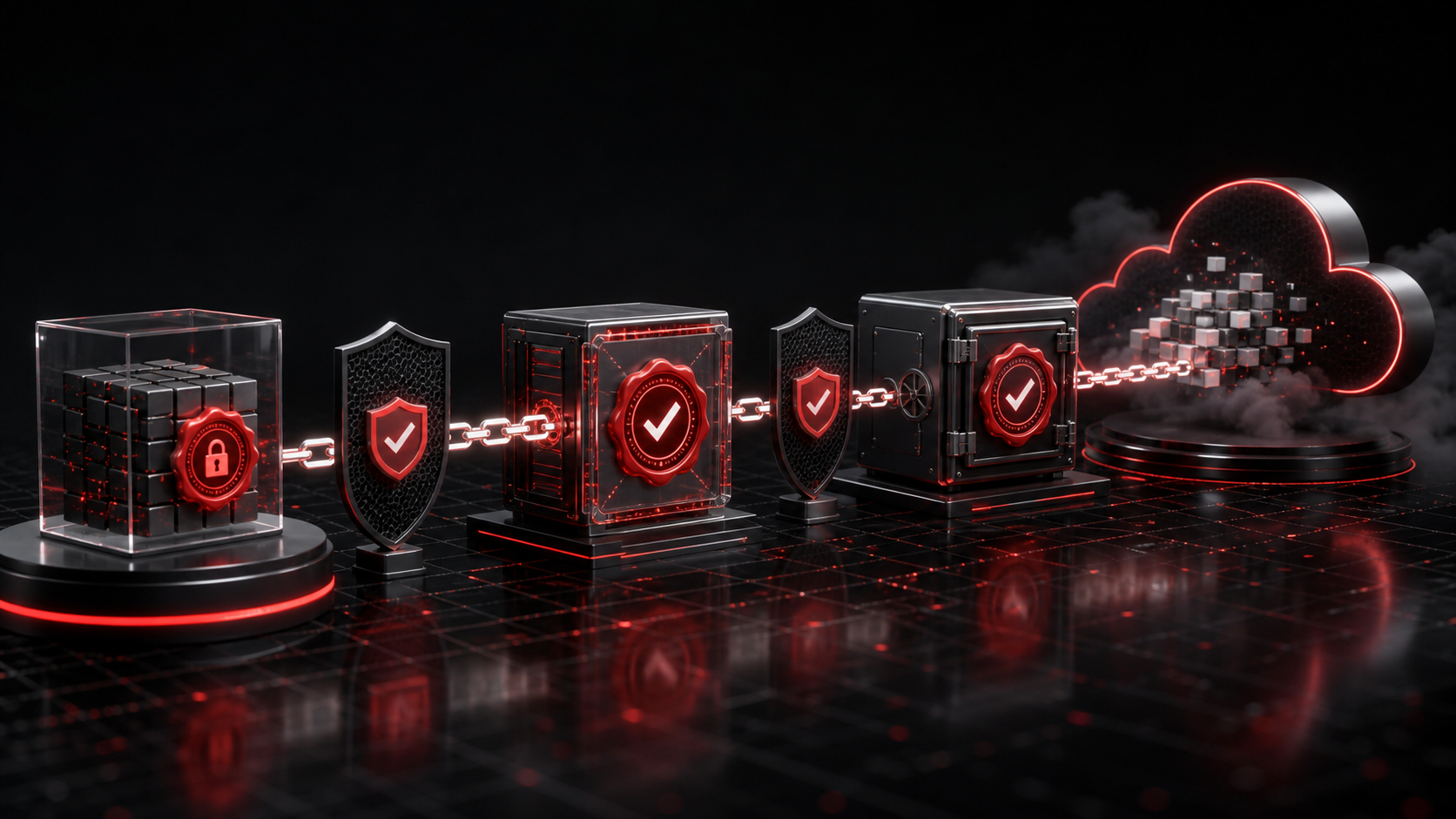
Source code + dependencies -> reviewed build -> trusted artifact -> controlled deployment -> monitored production
Protect the Build and Release Boundary
Build and release systems often hold powerful credentials and can publish code to production. Protect them with strong identity controls, branch protection, peer review, isolated runners, short-lived credentials, minimal permissions, and auditable approvals.
Pin and review dependencies and build actions where practical. Maintain artifact integrity and provenance so deployment systems can verify what they are receiving before a release reaches production.
Manage Third-Party and Dependency Risk
When a dependency has an advisory, do not treat a blind version update as the entire response. Confirm the component is present, understand the affected use, review the recommended fixed version, test compatibility in a controlled pipeline, and deploy with rollback and monitoring.
If immediate update is not possible, apply supported mitigations, limit exposure where appropriate, record the exception, and set a clear remediation date. The record should connect the component to the application and business owner.
Risk Rating
| Severity | Description |
|---|---|
| Critical | A trusted build identity, signing capability, or release pipeline can be used to introduce unauthorized code into production. |
| High | A vulnerable or untrusted component has broad production access, or build credentials are excessively privileged. |
| Medium | Dependency, provenance, or supplier visibility is incomplete but exploitation is constrained by existing controls. |
| Low | A process or documentation gap has limited direct exposure but should be resolved to improve assurance. |
Create Durable Supply-Chain Governance
Assign owners for critical suppliers, repositories, build systems, and artifacts. Define security expectations for acquisition, development, vulnerability response, continuity, access revocation, and incident notification.
Supply-chain security becomes sustainable when it is part of normal engineering and procurement work: clear standards, useful automation, meaningful evidence, and periodic reassessment of high-value suppliers and release paths.
Software Supply-Chain Security Checklist
- Applications, components, build systems, artifacts, and owners are traceable.
- Source control and CI/CD identities use MFA, least privilege, and review controls.
- Build runners, secrets, and artifact registries are isolated and monitored.
- Dependencies and build actions are governed, reviewed, and updated safely.
- Critical artifacts have integrity and provenance evidence before deployment.
- Supplier, vulnerability, and exception processes have named owners and review dates.