
API Security
Why API Authorization Requires Manual Security Testing
Automated scanners cannot understand every user, object, role, and business workflow.
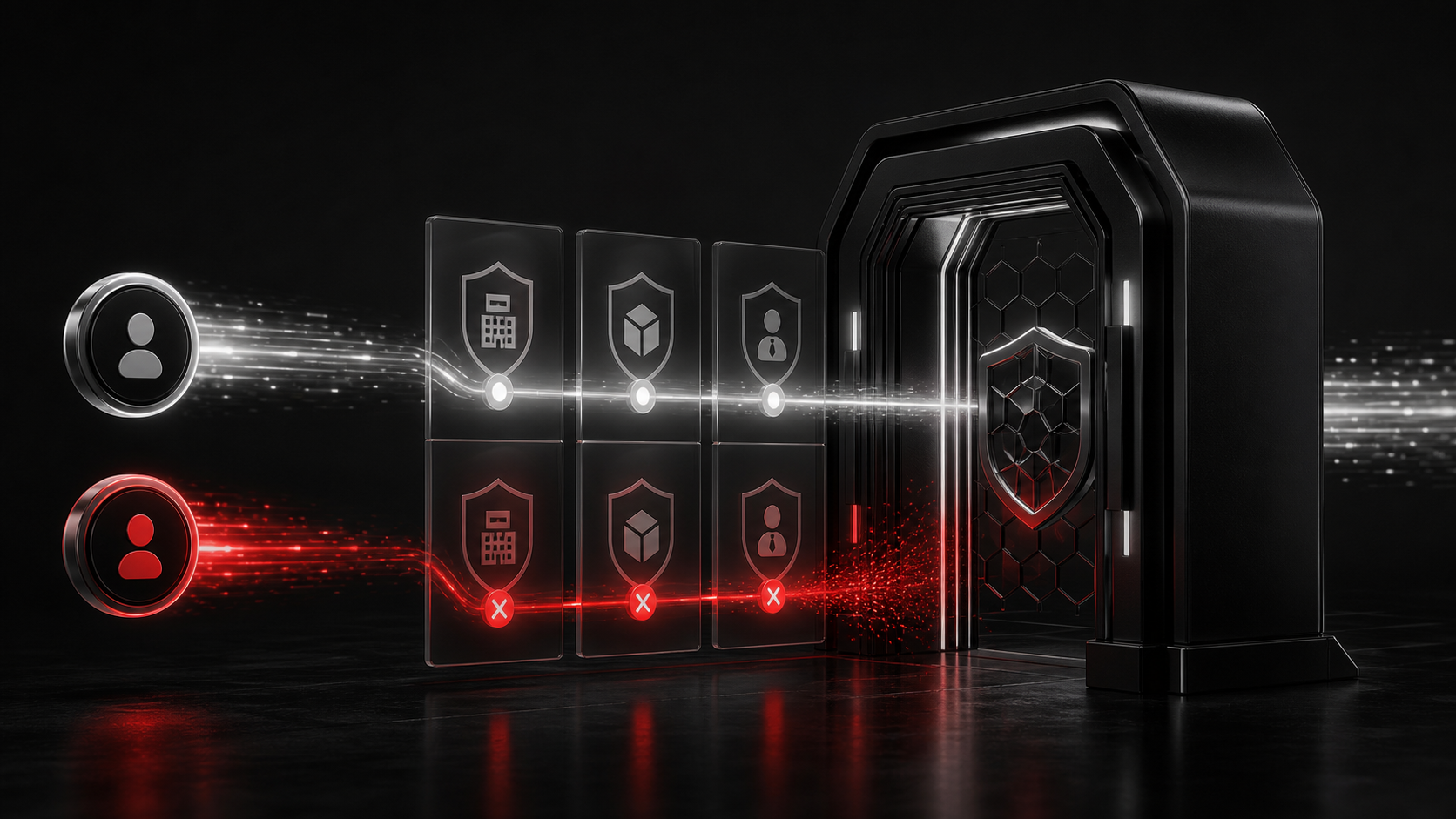
API authorization failures often depend on business context: who owns an object, which tenant it belongs to, and which action a role is allowed to perform.
Automated tools can discover endpoints and mutate identifiers, but they rarely understand complete workflows and expected authorization boundaries.
Manual testing uses multiple roles, object states, and sequences to identify BOLA, BFLA, tenant isolation failures, and workflow abuse.
The best results combine automation for breadth with human reasoning for depth.
Table of Contents
- Authentication versus authorization
- Why scanners miss context
- Safe object-access example
- Business impact
- Manual testing approach
- Remediation
Authentication Is Not Authorization
Authentication answers who the caller is. Authorization answers whether that caller may perform this action on this specific resource. A valid token does not prove that the requested customer, invoice, or tenant belongs to the caller.
Every sensitive request needs a server-side decision based on role, tenant, ownership, object state, and the intended business action.
Why Automation Is Not Enough
Automated scanners are useful for discovery and known technical patterns. They cannot reliably understand an organization’s role matrix, approval rules, tenant boundaries, or multi-step business workflow.
Manual testing compares carefully prepared identities, objects, and states against the rules the product is meant to enforce.
Safe Object-Level Access Example
In a test environment, give two customer accounts separate sample orders. Verify that Customer A cannot retrieve or modify Customer B’s order by changing only the object identifier.
A secure result is an access denial with no object data returned. The root cause is typically a missing server-side ownership check—not an identifier that was easy to guess.
Authenticated user → request for object → tenant + role + ownership check → safe response
Business Impact and Risk
| Severity | Description |
|---|---|
| Critical | Privileged function access enables broad account or system compromise. |
| High | Cross-tenant exposure of financial, customer, or regulated data. |
| Medium | Limited workflow abuse or access to non-sensitive records. |
| Low | Minor metadata disclosure without meaningful privilege impact. |
Manual Testing Approach
- Inventory endpoints, methods, objects, and sensitive business actions.
- Build a role-and-object test matrix using safe accounts and synthetic records.
- Validate horizontal access between peer users and vertical access to privileged functions.
- Test state changes, exports, bulk operations, and multi-step approval workflows.
- Check that denied responses do not disclose sensitive data.
Remediation Pattern
Enforce authorization close to the resource and deny by default. Centralized policy functions make the decision testable and consistent across API routes.
Do not rely on hidden interface controls, client-side checks, or identifiers that merely look difficult to predict.
API Authorization Checklist
- Every sensitive endpoint performs server-side authorization.
- Tenant, ownership, role, and object state are checked for each request.
- Tests cover peer users, privileged users, and cross-tenant scenarios.
- Sensitive actions use explicit allow-lists and audit logs.
- Denial responses do not expose protected data.