Cloud Native Security
Kubernetes Security: Hardening Clusters, Workloads, and the Software Supply Chain
A practical security baseline for cluster access, workload identity, images, network policies, and runtime visibility.
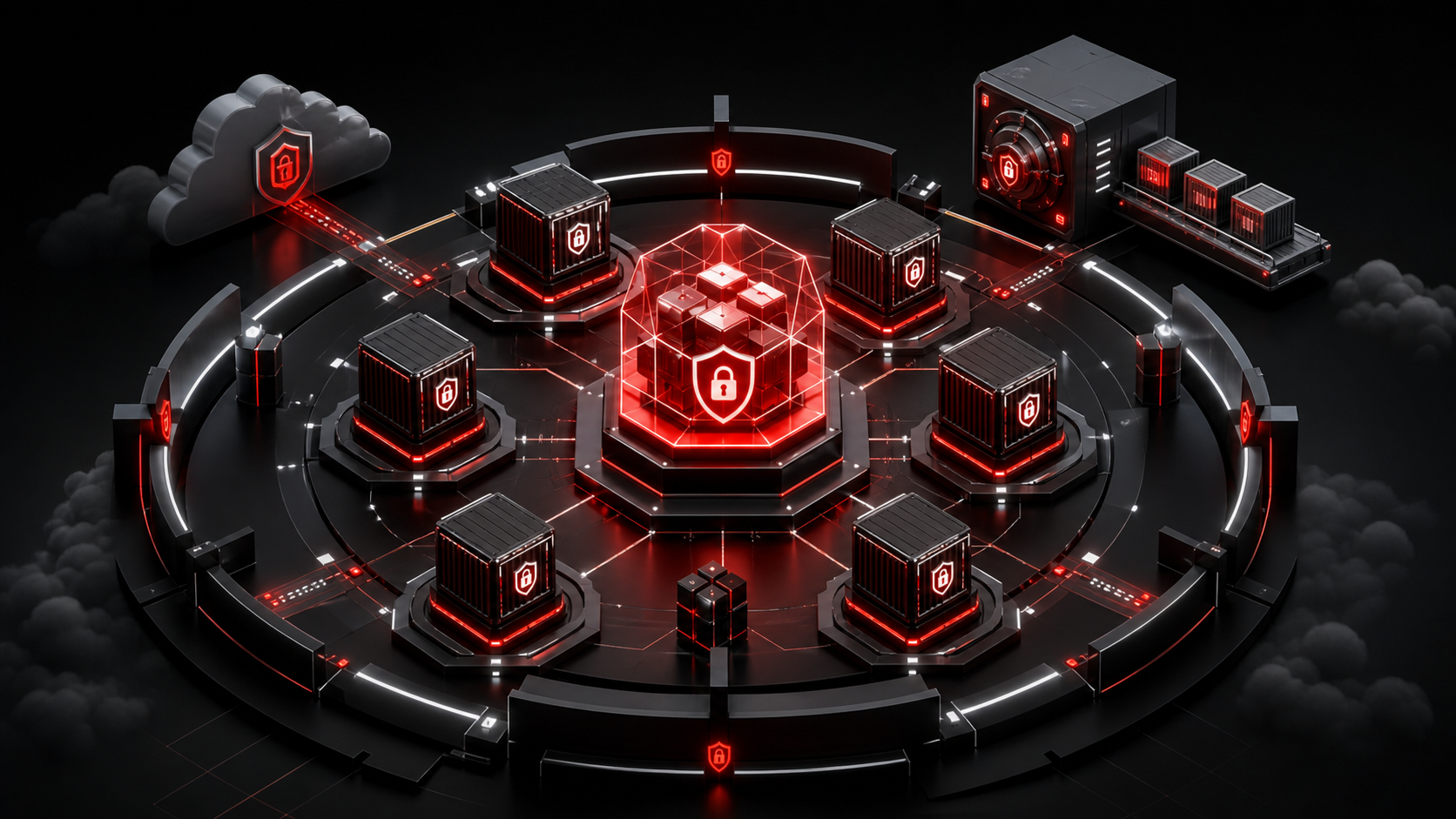
Kubernetes concentrates application, identity, network, and deployment risk in one powerful platform. This guide shows how to secure the control plane, workloads, images, secrets, and detection coverage together.
Table of Contents
- Why containers need layered security
- Map the Kubernetes attack surface
- Control identity, access, and admission
- Harden workloads and runtime behavior
- Risk rating
- Operate and improve the cluster securely
Why Containers Need Layered Security
Containers package applications and dependencies efficiently, but they do not eliminate responsibility for operating-system, image, registry, identity, network, storage, and runtime security. Kubernetes adds a powerful control plane that must be protected carefully.
A secure cluster uses defense in depth. The goal is to limit what a compromised workload, credential, image, or user can reach and to make suspicious activity visible quickly.
Map the Kubernetes Attack Surface
Assess the full delivery and runtime path: source code, container image, registry, CI/CD system, Kubernetes API, service accounts, nodes, network policies, secrets, storage, ingress, and audit logs.
This layered view helps teams avoid a common mistake: focusing on image scanning while overlooking overly broad permissions, exposed cluster administration, sensitive secrets, or weak workload isolation.
Code -> image -> registry -> CI/CD -> Kubernetes API -> workload -> network and data -> monitoring
Control Identity, Access, and Admission
The Kubernetes API should use strong authentication, least-privilege authorization, and clear auditability. Give people and workloads only the permissions they require, scoped to the relevant namespace rather than the entire cluster whenever possible.
Use policy and admission controls as guardrails for risky workloads and configuration. Review service-account permissions, secret access, cluster-wide roles, and administrative access regularly because excess authority can turn a small application issue into cluster-wide impact.
Harden Workloads and Runtime Behavior
Use trusted images, remove unnecessary packages, run workloads as non-root where feasible, avoid unnecessary Linux capabilities, and apply restrictive security settings appropriate to the application. Resource limits and network controls help reduce the impact of misuse or compromise.
Keep images, nodes, control-plane components, and supporting services patched. Collect cluster and workload telemetry centrally so important evidence survives a node or pod failure.
Risk Rating
| Severity | Description |
|---|---|
| Critical | An exposed control plane, cluster-administrator credential, or workload can provide broad control of production resources or sensitive data. |
| High | A privileged service account, exposed secret, vulnerable production image, or weak network boundary enables meaningful lateral movement or data access. |
| Medium | A workload hardening or visibility gap increases impact but is constrained by namespace, network, or identity controls. |
| Low | A best-practice gap has limited current reachability but should be addressed to maintain a defensible baseline. |
Operate and Improve the Cluster Securely
Security is continuous. Scan and govern images before release, patch nodes and control-plane components, review role assignments, test backup and recovery, centralize logs, and investigate unusual API or workload behavior.
Use periodic configuration reviews and targeted security testing to verify that platform controls work as intended. The valuable outcome is a repeatable secure operating model, not a one-time hardening checklist.
Kubernetes and Container Security Checklist
- Kubernetes API access uses strong authentication, least privilege, and audit logging.
- Human and workload permissions are scoped to the minimum required namespace and resource.
- Images are trusted, governed, scanned, and updated through a controlled release path.
- Workloads use restrictive security settings and avoid unnecessary root privileges or capabilities.
- Network, secret, storage, and ingress exposure are reviewed and minimized.
- Cluster, node, workload, and API telemetry is retained centrally and tested in response exercises.